Frequently Asked Questions
Should a Martini be shaken or stirred?
Stirred, if you want the classic silky texture. Shaking aerates the drink and breaks up small ice chips into the liquid, giving a cloudier, colder, slightly diluted result. James Bond’s ‘shaken not stirred’ was a character detail, not a bartender’s recommendation. Every good cocktail bar in the world stirs a Martini unless you specifically ask otherwise.
Gin or vodka in a Martini?
The original Martini is gin. Vodka Martinis are a 20th-century variation, brought into mass culture by Bond and the late-1990s cosmopolitan wave. A gin Martini has botanical complexity. A vodka Martini is essentially very cold, slightly flavoured vodka. Both are legitimate. Most bartenders prefer gin; most hotel bars in the US default to vodka.
How dry is a ‘dry Martini’?
Dry refers to the vermouth, not the gin. The ratio in the 1950s was around 4:1 gin to vermouth. ‘Dry’ pushed that to 6:1 or 8:1. ‘Extra dry’ or ‘in-and-out’ can mean just rinsing the glass with vermouth and pouring it out. The driest version is Winston Churchill’s approach: pour the gin, glance at the vermouth bottle.
What’s a dirty Martini?
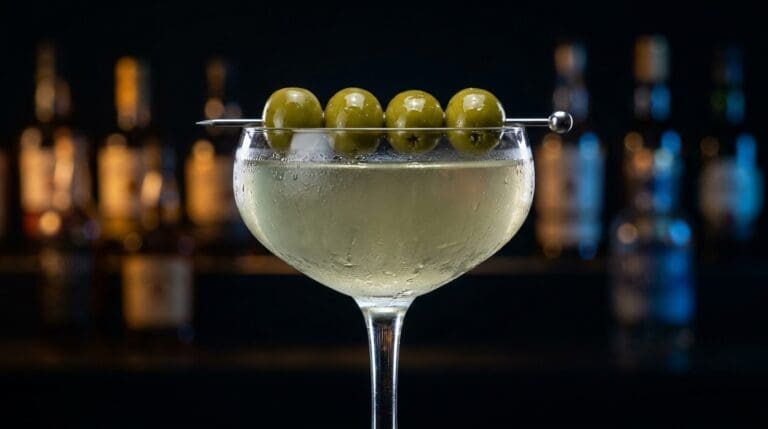
A Martini with a splash of olive brine added. Salty, savoury, a completely different drink to a classic Martini. Order one with blue-cheese-stuffed olives and you’ve got a meal. Purists hate them. Everyone who actually drinks them knows what they want.
Why three olives?
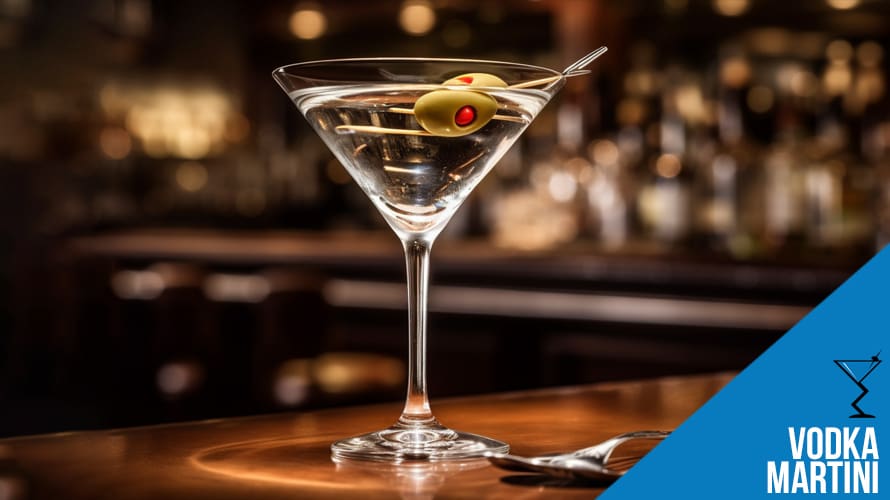
Convention, not a rule. The principle is that you don’t garnish with an even number because it looks off-balance in the glass. One or three is the aesthetic choice. If you want more olives, order extra. If you want none, ask for a twist instead.