Ingredients
- 2 oz White Rum
- 2 oz Coconut Rum
- 2 oz Pineapple Juice
Instructions
- Combine all ingredients in shaker.
- Add ice to fill.
- Shake vigorously, until shaker is frosted over.
- Fill hurricane glass with crushed ice.
- Strain cocktail into glass.
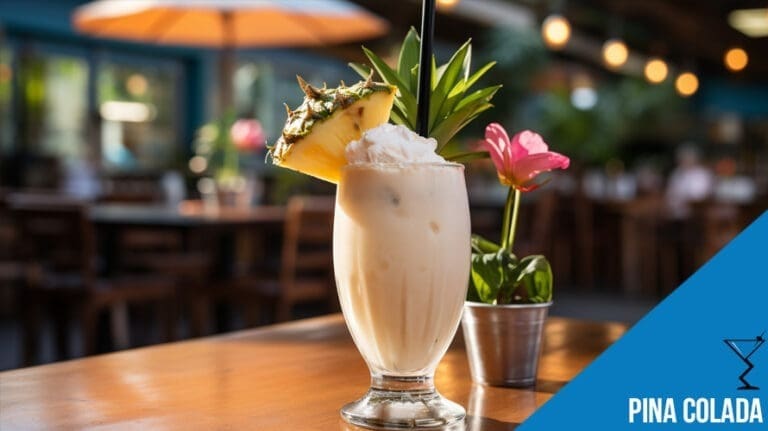
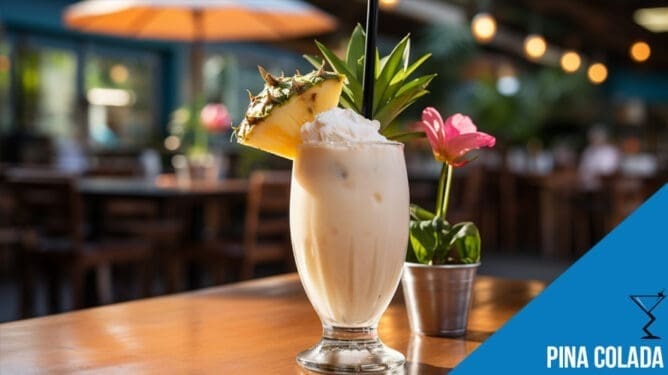
- Garnish with pineapple leaf and enjoy.
Estimated Nutrition:
Where it came from
Three Puerto Rican bars claim the Pina Colada. Caribe Hilton bartender Ramon Marrero is the most-cited inventor, with the date pinned at 1954. Don Ramon Portas Mingot at Barrachina says he got there in 1963. Ricardo Garcia at the same Caribe Hilton swears it was him in 1954. Puerto Rico made it the official drink of the island in 1978 and didn't pick a bar.
It went global in the 1970s with the Rupert Holmes song and the rise of frozen-drink machines on hotel terraces. The blender version is the famous one, but the original is shaken with a small amount of crushed ice over the top.
What it tastes like
Tropical and rich. Coconut cream brings fat and a faint vanilla, pineapple brings the acid and tropical sweetness, and the rum sits behind it all keeping the drink from turning into a dessert milkshake.
When the ratio is right it's creamy without being heavy. When the ratio is wrong it's either chalky (too much coconut) or watery (too much pineapple juice from a carton). Real coconut cream and fresh pineapple are the difference between a great Pina Colada and a beach disappointment.
The technique
Blend with crushed ice for the frozen version, shake hard with cubed ice for the classic. 60ml white rum, 60ml pineapple juice, 30ml coconut cream. If the cream is too thick, warm the can in hot water for a minute and stir before pouring.
Coco Lopez is the canonical brand, sweetened. If you use unsweetened coconut cream (like Kara) you'll need to add 10 to 15ml of simple syrup. Read the label before you build the drink.
Drink Buddy Exclusive
Tell us what's in your cabinet.
Our Cocktail Builder takes whatever bottles you've got and hands you every drink you can actually make tonight.
Get the Drink Buddy newsletter
One drink, one tip, one Tuesday a month.
Plus the recipes we drop before they hit the site. Zero spam.
Ingredient Spotlight
The bottles that make or break this drink.
The rum
- Use
- Light Puerto Rican white rum (Bacardi, Don Q Cristal)
- Try
- A 30ml dark rum float for a Painkiller-style finish
- Why
- White rum keeps the drink clean. Dark rum on top adds depth without muddying the body.
The coconut cream
- Use
- Coco Lopez or Real Cream of Coconut (sweetened)
- Skip
- Coconut milk (too thin) or unsweetened cream (no sweetness)
- Why
- Cream of coconut is the thick sweet stuff. Coconut milk is for curries.
The pineapple
- Use
- Fresh pineapple juice (or fresh chunks blended in)
- Skip
- Pineapple cordial or canned juice from concentrate
- Why
- Fresh pineapple has acid and aroma. Concentrate tastes like sweetened cardboard.
Variations
Other tropical rum drinks for the same beach-mood reasons.



What if I don't have…
Quick substitutions for when the bottle shop is closed.
Heavy cream + 15ml coconut syrup gets you close. Or 60ml coconut milk + 15ml simple syrup. Both are workable, neither is identical.
Fresh pineapple chunks blended with a splash of water. Tinned pineapple in juice (not syrup) works too.
Coconut rum (Malibu) skews it sweeter. Dark rum makes it heavier. Aged Demerara rum makes it adult.
Cut coconut cream to 20ml and bump pineapple to 75ml. Adds zing, drops the calories.
Skip the rum. Add 10ml lime juice for acid balance and 10ml extra coconut cream. Now it's a Virgin Pina Colada that doesn't taste sad.
Frequently Asked Questions
Direct answers to what people search for after Googling this drink.
What is in a Pina Colada?
White rum, coconut cream, pineapple juice. Classic spec: 60ml rum, 30ml coconut cream, 60ml fresh pineapple juice. Blended with crushed ice or shaken with cubed ice and poured over crushed ice.
How do you make a Pina Colada?
Frozen version: blend 60ml white rum, 30ml coconut cream, 60ml pineapple juice, and a cup of crushed ice for 20 seconds. Pour into a hurricane glass. Garnish with pineapple wedge and cherry. Shaken version: same liquids, shake hard with cubed ice, pour over crushed ice in the glass.
Where did the Pina Colada come from?
Puerto Rico, somewhere between 1954 and 1963, depending on which bar you ask. The most-cited inventor is Ramon Monchito Marrero at the Caribe Hilton in San Juan. Puerto Rico made it the official drink of the island in 1978.
Coconut cream vs coconut milk in a Pina Colada?
Coconut cream (Coco Lopez, Real) is sweetened, thick, and rich. Coconut milk is unsweetened and thin. The drink needs cream of coconut. Coconut milk plus sugar gets close but isn't identical.
Should a Pina Colada be blended or shaken?
Either works. Blended is the famous version (the slushie). Shaken with crushed ice over the top is the more old-school approach and has a slightly cleaner texture.
How strong is a Pina Colada?
About 10 to 12 percent ABV in the glass, depending on dilution. Lighter than most cocktails because of the volume of pineapple and coconut. Drinks fast.
What rum is best for a Pina Colada?
Light Puerto Rican white rum (Bacardi, Don Q). Some bartenders float a 30ml dark rum on top for depth, which turns it Painkiller-adjacent. Avoid spiced rum unless you want a Christmas-cake vibe.
Why is my Pina Colada watery?
Either you used pineapple juice from a carton (mostly water) or you over-blended the ice. Use fresh pineapple where possible, blend for 15 to 20 seconds maximum, and serve immediately.
Why is my Pina Colada chalky?
Too much coconut cream or coconut milk that wasn't shaken before pouring. The fats separate in the can. Stir or shake before measuring.
What glass should I use?
Hurricane glass is traditional. A large rocks glass works. Tall mug, coconut shell, or pineapple half all work for theatre. Whatever holds 350ml and looks at home on a beach.
More Like This
More cocktails that lean creamy, fruity, or both.