How to Rim a Cocktail Glass: Salt, Sugar, and Spice
Thirty seconds of effort. Night-and-day difference. Here are the three rim types every home bartender should master, and the mistakes that make a good drink look cheap.

Rimming a glass is the easiest way to turn a passable cocktail into one that looks and tastes bar-quality. It takes thirty seconds, it costs nothing, and if you do it wrong it looks cheap. Here is how to do it right, every time.
The three-step rim that works every time
- Pick your rim material. Flaky sea salt for margaritas and palomas. Fine caster sugar for Lemon Drops and Sidecars. Chili salt (Tajin or a homemade salt plus chili powder) for spicy margaritas and micheladas.
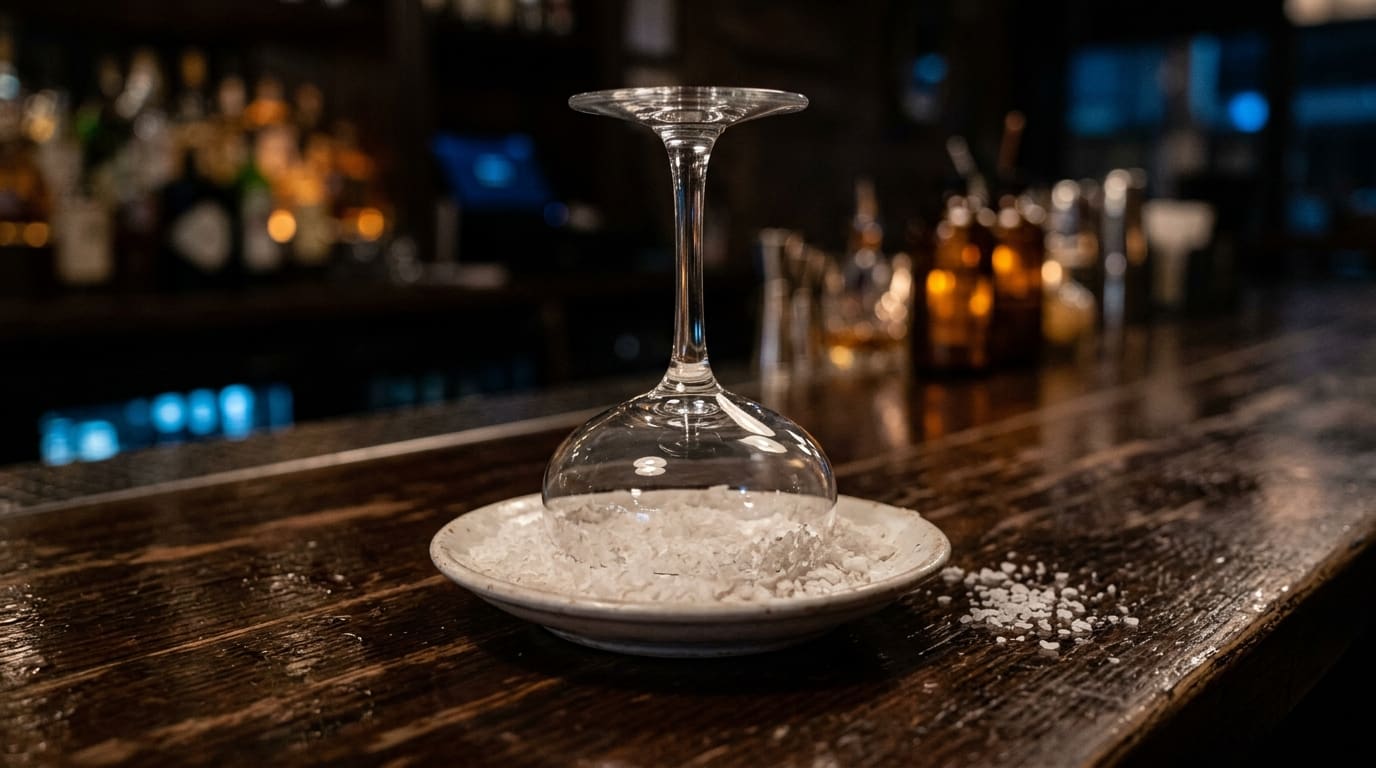
- Wet the rim. Cut a wedge of citrus (lime for salt rims, lemon for sugar rims), run it firmly around the outside of the glass rim. Only the outside. If you wet the inside too, the rim material dissolves into the drink.
- Dip and rotate. Pour the rim material onto a small flat plate. Tip the glass at a slight angle and roll the wet rim through the pile, rotating slowly. Lift, tap lightly to shake off loose grains. Done.
Which cocktails need which rim
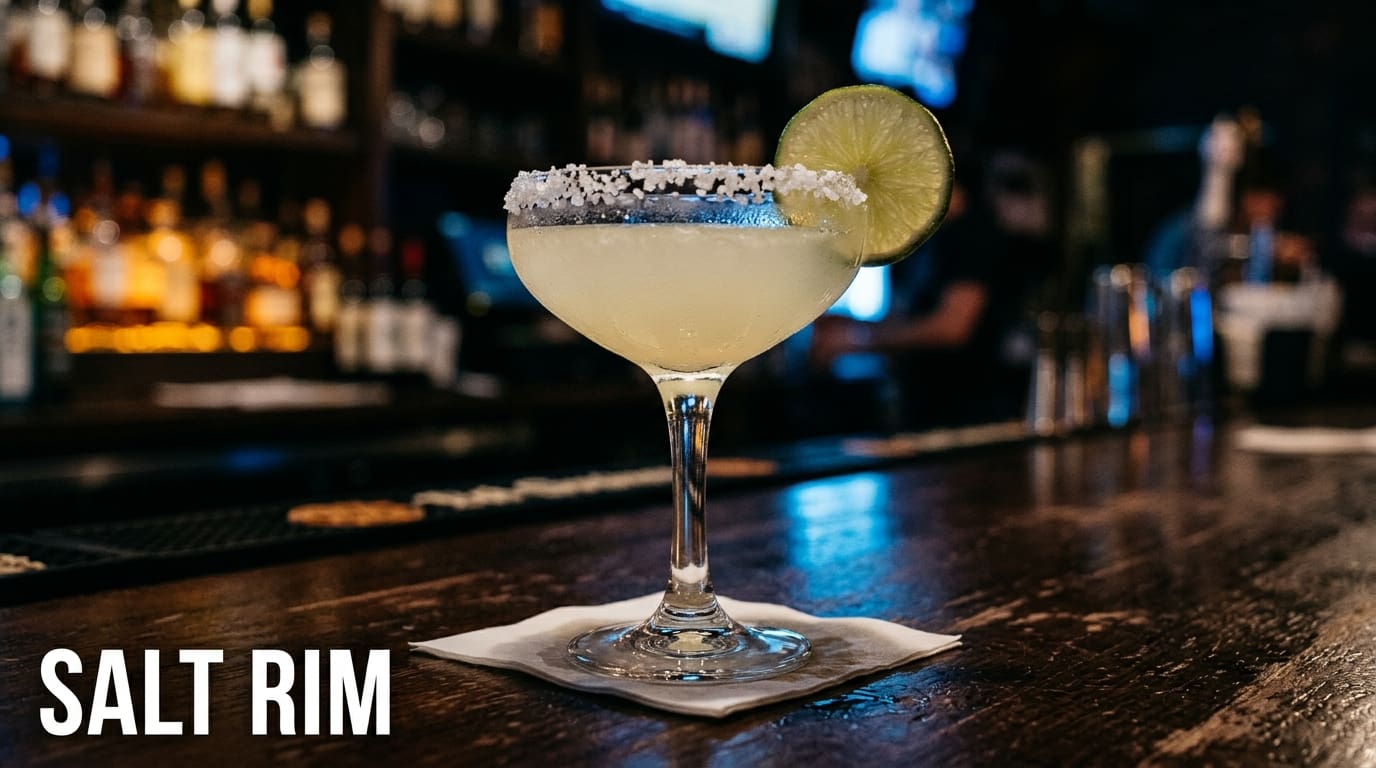
Salt rim, for tequila and mezcal
The classic choice for tequila and mezcal cocktails. The salt hits before the drink does, which sharpens the lime and opens up the agave. Use flaky sea salt (Maldon, Murray River) rather than table salt: the flakes stick better and taste cleaner.
Works on: Margarita, Paloma, Tommy’s Margarita, Bloody Mary, Michelada, Tequila Sunrise.
Sugar rim, for sweet citrus drinks
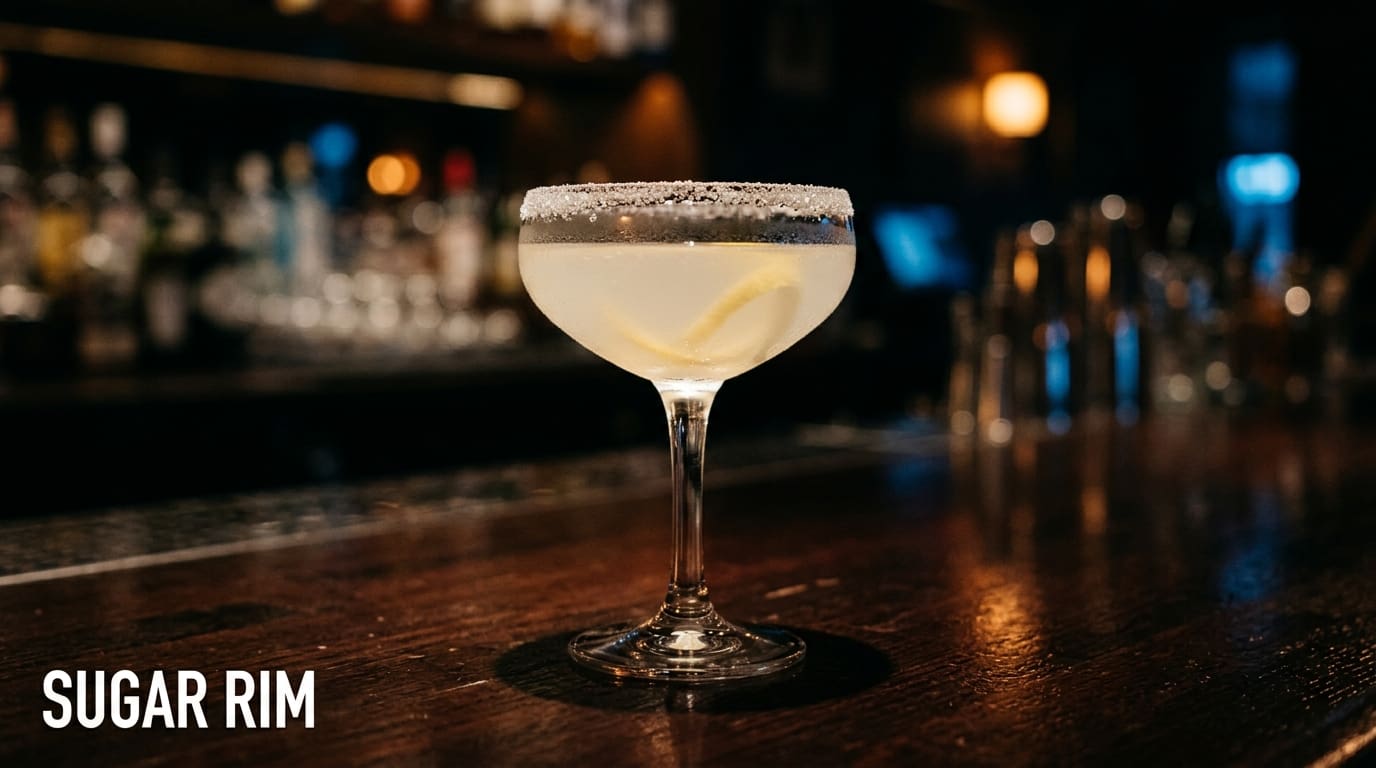
For sweeter, citrus-forward drinks. The sugar balances tartness without adding more syrup to the drink itself. Fine caster sugar sticks best; granulated sugar falls off. Coloured sanding sugar works for themed drinks.
Works on: Lemon Drop Martini, Sidecar, Chocolate Martini (cocoa-sugar rim), Cosmopolitan (occasionally), Key Lime Martini.
Chili / spice rim, for heat-forward cocktails
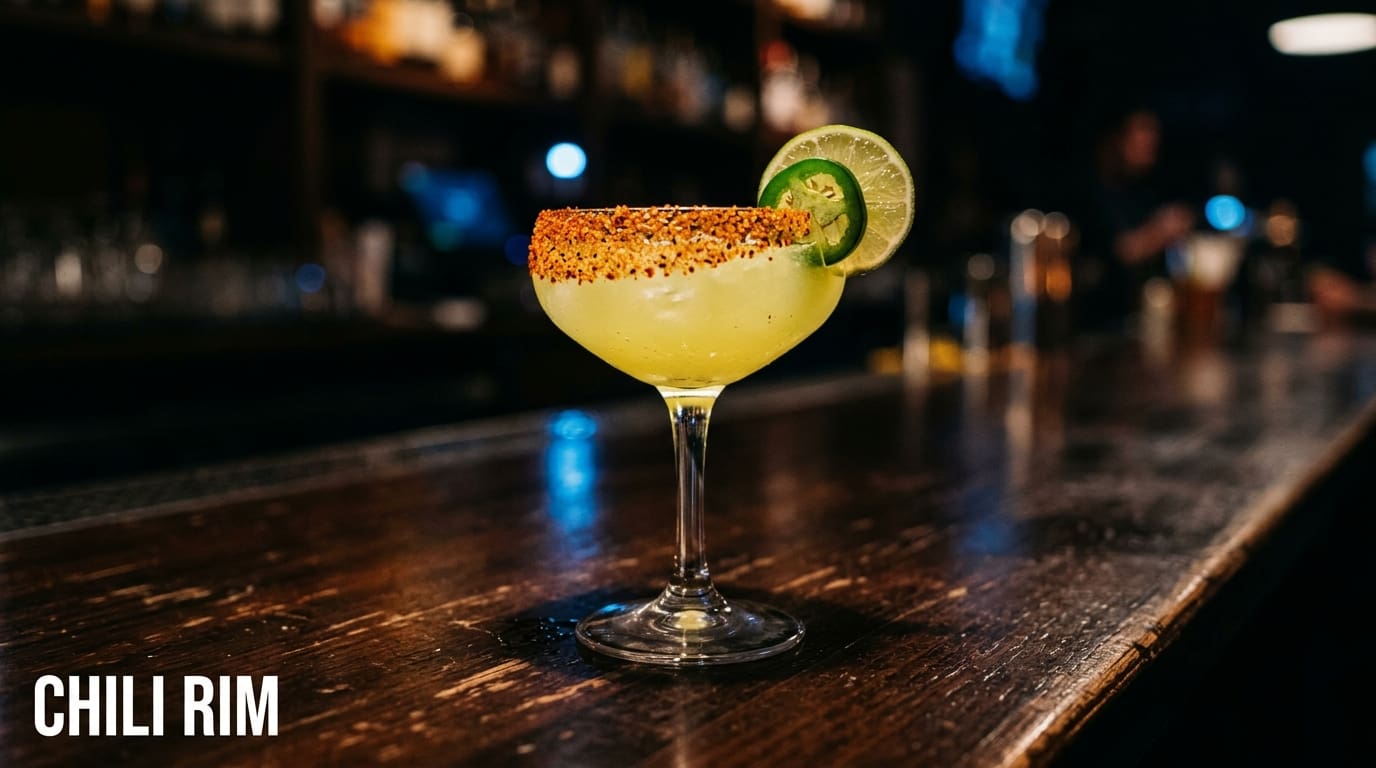
The heat equivalent of a salt rim. Chili salt amplifies the drink’s own heat (if any) and adds a dry, sharp edge that sits on your lips between sips. The easiest version: Tajin, straight from the jar. The slightly better version: mix 2 parts flaky salt with 1 part good chili powder (Ancho, Aleppo, chipotle).
Works on: Spicy Margarita, Spicy Tajin Margarita, Mezcal Paloma, Bloody Maria.
Three mistakes to skip
Using table salt instead of flaky sea salt
Table salt is over-salty and sticks in uneven clumps. Flaky sea salt (Maldon is the bartending standard) has broader, thinner flakes that stick evenly and taste cleaner. A $6 box lasts a hundred drinks.
Wetting the inside of the rim
The biggest rookie error. If your lime wedge drifts onto the inside of the glass, the salt dissolves off the rim and floats into the drink as you pour, making the first few sips painfully briny. Keep the citrus outside the rim only.
Half-rimming like a pro
If you’re not sure your guest wants a salt rim, don’t skip it: half-rim it. Only wet half the rim, dip only that half. The drinker chooses their sip: salt side for salt, clean side for straight cocktail. Every decent cocktail bar does this for drinks where the rim is a preference, not a requirement.
Advanced rims worth trying
- Graham cracker rim for a Key Lime Martini or Whisky Sour: crush graham crackers finely, mix with a pinch of sugar, rim with lime juice.
- Cocoa rim for chocolate-based cocktails: mix 3 parts cocoa powder with 1 part caster sugar, rim with water or chocolate liqueur.
- Black Hawaiian salt rim for tiki drinks: dramatic visually, slightly mineral-tasting, pairs beautifully with rum.
- Smoked salt rim for a smoked Old Fashioned or Mezcal Margarita: doubles down on any smoke already in the drink.
When NOT to rim
A good rule: if the drink is spirit-forward and stirred (Martini, Manhattan, Negroni, Old Fashioned), don’t rim. Rims belong on shaken, citrus-forward drinks where the salt or sugar complements the sour-sweet balance. A salt rim on a Martini is just bad.