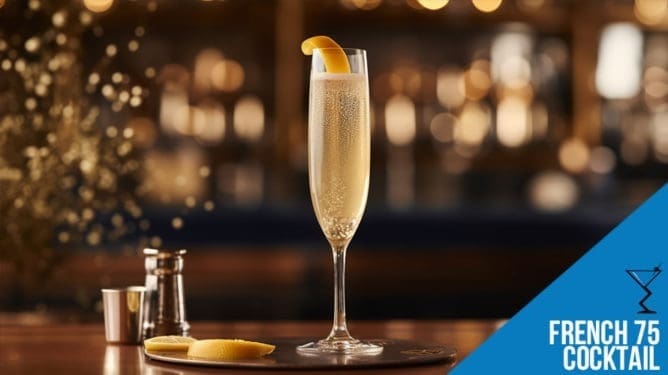
Ingredients
- 1 oz Gin
- 1 oz Lemon Juice
- 1 oz Sugar Syrup
- 4 oz Champagne
Instructions
- Vigorously shake the gin, lemon juice and sugar syrup with ice,
- Pour or strain into a tall glass .
- Add the champagne and stir.
Estimated Nutrition:
Where it came from
Named for the French 75 millimeter field gun, a fast-firing weapon used during World War One, this drink is far friendlier than its namesake. Its precise origin is debated, but drinks historian David Wondrich notes the recipe first appeared in print in 1927 in a New York humor magazine’s “Here’s How” book, during Prohibition. It quickly became a popular choice for those seeking a spirited, celebratory tipple.
The French 75 sits squarely in the sour family, essentially a gin sour topped with sparkling wine. It shares DNA with the Tom Collins or Gin Fizz, but the inclusion of Champagne instead of soda water gives it a more luxurious texture and a drier, more complex finish. It's a step up in elegance from its highball cousins, offering a richer experience.
You’d find a French 75 at a high-end brunch, a swanky cocktail bar, or as an aperitif before a nice dinner. It’s a versatile drink that fits celebratory gatherings, but it’s equally at home as a sophisticated choice for a quiet evening out. This isn’t a dive bar special, but a staple in any establishment that takes its cocktails seriously.
What it tastes like
Expect a bright, tart opening from the fresh lemon, quickly followed by the aromatic botanicals of the gin. The sugar syrup provides a necessary balance, preventing it from being overly sour. As the Champagne hits, it introduces a dry, yeasty complexity and a delightful effervescence that cleanses the palate, leading to a crisp, refreshing finish.
With 1 oz of 40% ABV gin and 4 oz of 12% ABV Champagne in a 7 oz drink, the French 75 clocks in around 12.5% alcohol by volume. This makes it comparable to a strong glass of wine or a double IPA. Don’t let the bubbles fool you; it’s a cocktail with a decent kick, so pace yourself.
The technique
To build a French 75, combine the gin, fresh lemon juice, and sugar syrup in a shaker with ice. Give it a good, vigorous shake to chill and dilute the ingredients properly. Double strain the mixture into a chilled tall glass, typically a Champagne flute or a Collins glass. Finally, top it off with the chilled Champagne and give it one or two gentle stirs to combine, without losing too much fizz.
The single most crucial technique for a French 75 is to avoid over stirring the Champagne. After adding the sparkling wine, a quick, gentle stir is all you need to integrate the ingredients. Over stirring, or God forbid, shaking the Champagne, will de-carbonate the drink, leaving you with a flat, lifeless cocktail that misses the entire point of its effervescent charm.
Drink Buddy Exclusive
Tell us what's in your cabinet.
Our Cocktail Builder takes whatever bottles you've got and hands you every drink you can actually make tonight.
Open the Builder →Get the Drink Buddy newsletter
One drink, one tip, one Tuesday a month.
Plus the recipes we drop before they hit the site. Zero spam.
Ingredient Spotlight
The bottles that make or break this drink.
Gin
- Use
- A classic London Dry gin is your best bet here. Its juniper and botanical notes provide a solid backbone that complements the lemon and Champagne. Think Tanqueray or Beefeater.
- Skip
- Heavily floral gins or aged gins can clash with the other ingredients or get lost in the fizz. Save those for drinks where their nuanced flavors can truly shine.
- Why
- Gin is the base spirit, giving the drink its structure and a complex aromatic profile that interacts beautifully with the citrus and the sparkling wine.
Champagne
- Use
- A dry Brut Champagne is the traditional and best choice. Its crispness, dryness, and fine bubbles are key to the drink’s character. Dry Prosecco or Cava can work as a substitute.
- Skip
- Avoid overly sweet sparkling wines like Moscato d’Asti. They will throw off the carefully balanced tartness of the drink and make it cloying.
- Why
- Champagne provides the essential effervescence, a distinct dry finish, and a subtle yeasty complexity that transforms a simple gin sour into the celebratory French 75.
Three Variations
Three real ways bartenders riff on this drink. Same idea, three different jackets.
French 76
- Vodka for gin
- Swap the gin for vodka to create a cleaner, less botanical version of the drink. It's a good option for those who aren’t keen on gin’s juniper notes.
French 95
- Bourbon for gin
- Substitute bourbon for the gin to introduce a warmer, richer, and slightly sweeter profile. The whiskey notes blend surprisingly well with the lemon and Champagne.
Elderflower 75
- A floral twist
- Add a touch of elderflower liqueur alongside the gin, reducing the sugar syrup slightly to account for the liqueur’s sweetness. This variation adds a delicate floral aroma and flavor.
What if I don't have…
Quick substitutions for when the bottle shop is closed.
Vodka or a light rum can be used, but the drink will lose its signature botanical complexity.
Fresh lime juice will work, but expect a slightly different, sharper profile.
Granulated sugar can be muddled with the lemon juice in the shaker, but ensure it fully dissolves. Agave nectar also works, use slightly less.
A dry Prosecco or Cava makes a decent stand-in, but the flavor and texture will shift from true Champagne.
A chilled coupe glass or even a rocks glass can work in a pinch, though you’ll lose some of the visual appeal and effervescence retention.
Frequently Asked Questions
Direct answers to what people search for after Googling this drink.
What is in a French 75 Cocktail?
A French 75 Cocktail contains gin, fresh lemon juice, sugar syrup, and Champagne.
Why is the French 75 Cocktail called that?
It’s named after the fast-firing 75 millimeter field gun used by the French during World War One, reflecting its potent kick.
Is a French 75 Cocktail a strong drink?
Yes, it’s roughly 12.5% ABV, similar to a strong glass of wine or a double IPA, so it packs a decent punch.
What kind of gin should I use for a French 75 Cocktail?
A classic London Dry gin is best, as its juniper and botanical notes complement the lemon and Champagne well.
What kind of Champagne should I use for a French 75 Cocktail?
A dry Brut Champagne is the traditional choice, providing the right balance of dryness and effervescence.
Can I use Prosecco instead of Champagne in a French 75 Cocktail?
Yes, dry Prosecco or Cava can be used as a substitute, but expect a slightly different flavor and texture than with true Champagne.
Is a French 75 Cocktail sweet or dry?
It’s generally balanced, starting tart and finishing dry and refreshing, with the sugar syrup balancing the lemon and the Champagne contributing dryness.
When is the best time to drink a French 75 Cocktail?
It’s perfect for celebrations, brunch, as an aperitif, or any time you want a sophisticated, refreshing, and bubbly cocktail.
More Like This
More drinks in the same family when the night calls for them.