Instructions
Muddle the Cucumber:
- In a cocktail shaker, muddle the cucumber slice to release its fresh, crisp flavor.
Add Ingredients:
- Add 2 oz sake, 1 oz unflavored vodka, 1 tsp wasabi paste, 1 tsp soy sauce, and 1 tsp rice vinegar to the shaker.
Shake and Chill:
- Fill the shaker with ice and shake vigorously to blend the flavors and chill the mixture.
Strain and Serve:
- Strain the mixture into a chilled martini glass.
Garnish and Enjoy:
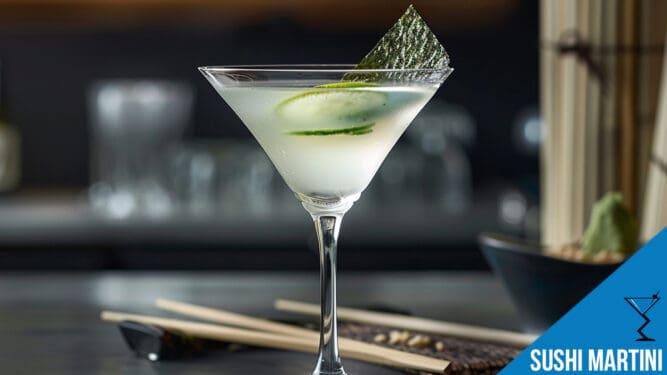
- Garnish with a small piece of nori sheet for a touch of oceanic flair. Sip and enjoy the savory, umami-rich experience of the Sushi Martini.
Notes
Estimated Nutrition:

Where it came from
This isn't a historical classic but a modern creation, likely emerging from the fusion cuisine movement of the late 20th or early 21st century. It's a testament to bartenders experimenting with global flavors, particularly those from the Pacific Rim, integrating them into traditional Western cocktail structures.
At its core, the Sushi Martini is a savory variation of the classic Martini. It shares DNA with other umami-driven cocktails, but its specific use of Japanese elements, often sake or a subtle savory note, sets it apart from olive brine or pickle juice martinis.
You're most likely to encounter a Sushi Martini in an upscale sushi restaurant, a sophisticated cocktail bar with an adventurous menu, or perhaps at a well-appointed home bar. It's a niche drink, but a rewarding one for those seeking something unique.
What it tastes like
Expect a clean, crisp attack followed by a wave of subtle umami and a hint of salinity or a delicate vegetal note, depending on the specific recipe. The base spirit provides the backbone, while sake introduces a nuanced rice wine character. It's savory and spirit-forward, with an intriguing depth that lingers.
This is a strong drink, typically clocking in around 25-30% ABV, similar to a classic Martini. Think of it as roughly five to six times the alcohol content of a standard light beer. Sip it slowly and appreciate its complex profile.
The technique
Build this drink by stirring the ingredients over ice in a mixing glass until well chilled. Strain it neat into a chilled martini or coupe glass. Garnish simply, perhaps with a thin cucumber ribbon, a pickled ginger slice, or a very small strip of nori.
The key technique is proper chilling and dilution. Stir for a full 30 seconds or until the mixing glass is thoroughly frosted. This ensures the drink is cold enough to open up its subtle savory notes without being watery.
Ingredient Spotlight
The bottles that make or break this drink.
Sake
- Use
- A dry, high-quality Junmai or Ginjo sake. Look for clean, slightly fruity, or earthy notes without excessive sweetness.
- Skip
- Cheap cooking sake (mirin) or overly sweet varieties. These will unbalance the drink and mask the delicate flavors.
- Why
- Sake provides the delicate rice wine character and a crucial layer of umami without overpowering the drink. It's essential for the 'sushi' aspect.
Gin
- Use
- A clean, juniper-forward gin or a Japanese craft gin that complements savory notes. Brands like Tanqueray, Plymouth, or Roku Gin work well.
- Skip
- Overly floral, citrus-heavy, or intensely spicy gins that might clash with the delicate savory profile.
- Why
- Gin provides the necessary botanical structure and backbone, ensuring it still feels like a Martini. It adds complexity without taking over.
Three Variations
Three real ways bartenders riff on this drink.
Spicy Sushi
- A fiery kick
- Add a dash of chili tincture or muddle a thin slice of jalapeño in the mixing glass before stirring for an extra layer of heat.
Cucumber Wasabi
- Cool with a bite
- Muddle a few thin cucumber slices and add a tiny dot of wasabi paste to the mixing glass. This enhances the fresh and pungent notes.
Sake Bomb Martini
- Double down on rice
- Increase the proportion of sake and slightly reduce the base spirit for a softer, more sake-forward profile that's still dry and savory.
What if I don't have…
Quick substitutions for when the bottle shop is closed.
Try a very small dash (less than 0.25 oz) of dry rice wine vinegar for a similar acidic and umami hint, or use a clean, dry vermouth.
Use a high-quality neutral vodka for a cleaner, less botanical profile that allows the savory notes to shine even more clearly.
A chilled coupe glass, a small chilled wine glass, or even a small rocks glass (served neat) works perfectly well.
A small lime twist, a few thin slices of radish, or a tiny strip of nori can offer a similar fresh visual and subtle aromatic.
Frequently Asked Questions
Direct answers to what people search for after Googling this drink.
What is in a Sushi Martini?
Typically, a Sushi Martini contains a base spirit like gin or vodka, dry sake, and sometimes a savory modifier like dry vermouth, a dash of rice vinegar, or a hint of ginger. Garnishes often include cucumber, pickled ginger, or nori.
Is it actually made with sushi?
No, the Sushi Martini does not contain actual sushi or raw fish. Its name refers to the savory, umami-rich flavor profile and Japanese-inspired ingredients, not the dish itself.
Is it a sweet drink?
No, the Sushi Martini is generally a dry, savory, and spirit-forward cocktail. It is not intended to be sweet or fruity.
What kind of gin is best for a Sushi Martini?
A clean, juniper-forward gin or a Japanese craft gin that complements savory notes works best. Avoid overly floral or citrus-heavy gins.
Can I make it with vodka instead of gin?
Yes, a high-quality neutral vodka is an excellent choice if you prefer a cleaner, less botanical profile that allows the sake and savory notes to shine.
What's a good garnish for a Sushi Martini?
Thin cucumber ribbons, a slice of pickled ginger, or a small strip of nori are classic garnishes that enhance the Japanese theme and visual appeal.
Is this a strong cocktail?
Yes, similar to a classic Martini, the Sushi Martini is a spirit-forward drink with a relatively high alcohol content. It is meant for sipping and savoring.
Where did the Sushi Martini originate?
It's a modern cocktail, likely developed in the late 20th or early 21st century by bartenders exploring fusion flavors, particularly those inspired by Japanese cuisine and its umami notes.
More Like This
More drinks in the same family.