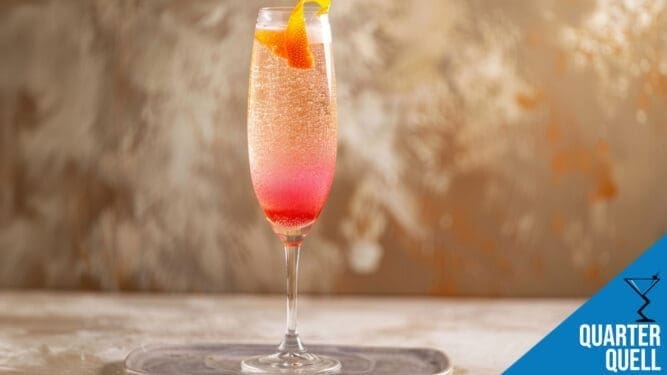
Ingredients
- .5 oz Raspberry Liqueur
- .5 oz Elderflower Liqueur
- Prosecco
- Orange(s) (twist)
Instructions
Add Liqueurs:
- Pour 0.5 oz of raspberry liqueur and 0.5 oz of elderflower liqueur into a champagne flute.
Top with Prosecco:
- Fill the flute with Prosecco, pouring slowly to maintain the bubbles.
Garnish:
- Garnish with a twist of orange.
Notes
Estimated Nutrition:
Where it came from
This cocktail isn’t some forgotten classic from a gilded age bar. Its name and character suggest a modern origin, likely inspired by the popular ‘Hunger Games’ series and its ‘Quarter Quell’ events. It’s a modern concoction designed to evoke a certain mood or theme, rather than evolving from a long tradition of mixology. Think of it as a themed drink for a fan gathering or a party where a touch of narrative flair is appreciated.
The Quarter Quell Cocktail fits squarely into the ‘sparkling wine cocktail’ family. It’s a close cousin to drinks like the Bellini or a Kir Royale, which also combine fruit liqueurs with bubbly. What sets it apart is the specific pairing of raspberry and elderflower, offering a more complex floral and berry profile than a simple peach or blackcurrant liqueur. It leans into elegance rather than pure fruit bomb territory.
You’d typically find or serve this drink at events that call for something light and celebratory. Think a daytime garden party, a bridal shower, or a pre-dinner reception where guests are mingling. It’s also a solid choice for a sophisticated brunch, offering a refreshing alternative to mimosas or bellinis. It’s not a dive bar drink, nor is it a serious cocktail bar’s featured spirit-forward offering.
What it tastes like
From the first sip, the Quarter Quell Cocktail offers a bright and fruity opening, dominated by the sweet tartness of raspberry. This quickly gives way to the delicate, honeyed floral notes of elderflower liqueur in the mid-palate. The finish is clean and crisp, with the dry effervescence of the Prosecco scrubbing the palate, leaving a light berry and floral whisper. The orange twist adds an aromatic lift, but doesn’t overtly flavor the drink.
Given the typical ABVs for the liqueurs (raspberry around 16.5 percent, elderflower around 20 percent) and Prosecco (around 11 percent), a 6-ounce Quarter Quell Cocktail will land somewhere around 12 to 13 percent alcohol by volume. This makes it roughly equivalent to a strong craft beer or a standard glass of wine. It’s a lighter option compared to a spirit-forward cocktail, designed for sessionable sipping rather than a quick buzz.
The technique
Building a Quarter Quell Cocktail is straightforward, but a few details make the difference. Start with a chilled champagne flute to keep the drink colder longer and preserve its sparkle. Pour the raspberry and elderflower liqueurs directly into the flute. Then, slowly top the glass with Prosecco, aiming for the side of the glass to minimize foam and retain as many bubbles as possible. Finish with a fresh orange twist, expressed over the drink before dropping it in.
The most important technique here is how you handle the Prosecco. Pouring it slowly and gently down the side of the flute is key. If you dump it in quickly, you’ll lose a significant amount of carbonation to aggressive foaming. This matters because the lively fizz of the Prosecco is integral to the drink’s light character and mouthfeel. Skip this, and you end up with a flat, syrupy drink that misses the point entirely.
Drink Buddy Exclusive
Tell us what's in your cabinet.
Our Cocktail Builder takes whatever bottles you've got and hands you every drink you can actually make tonight.
Open the Builder →Get the Drink Buddy newsletter
One drink, one tip, one Tuesday a month.
Plus the recipes we drop before they hit the site. Zero spam.
Ingredient Spotlight
The bottles that make or break this drink.
Raspberry Liqueur
- Use
- Chambord is the gold standard for raspberry liqueur, offering a rich, authentic berry flavor. Other quality options like Rothman & Winter Orchard Raspberry or Giffard Framboise also work well. Aim for something with real fruit character, usually around 16-20 percent ABV.
- Skip
- Avoid overly sweet, artificial ‘raspberry flavored’ syrups or cordials that lack depth. These will make the drink taste like a bad fruit soda rather than a sophisticated cocktail.
- Why
- Raspberry liqueur provides the primary fruit sweetness and a crucial tart counterpoint to the floral elderflower. It anchors the drink’s berry profile and gives it its vibrant, inviting color.
Elderflower Liqueur
- Use
- St-Germain is the industry benchmark for elderflower liqueur, known for its delicate, honeyed floral notes. Giffard Fleur de Sureau Sauvage is another excellent choice, offering similar complexity. These typically sit around 20 percent ABV.
- Skip
- Don’t use elderflower syrups or artificial extracts unless absolutely necessary and balanced with a neutral spirit. They often lack the nuanced floral depth and can taste overly perfumed or medicinal.
- Why
- Elderflower liqueur contributes the unique, sophisticated floral aroma and taste that balances the raspberry. It adds complexity and a light, fragrant character, preventing the drink from being just another sweet berry bubbly.
Three Variations
Three real ways bartenders riff on this drink. Same idea, three different jackets.
Royal Quell
- A little extra kick
- Add 0.5 oz of a dry gin or vodka to the flute before adding the liqueurs and Prosecco. This gives the drink a bit more backbone without overpowering the delicate flavors.
Summer Quell
- Brighter and zestier
- Substitute the orange twist with a lemon twist or a few fresh mint leaves. The lemon will add a sharper citrus aroma, while mint brings a cooling herbaceous note.
Winter Quell
- Deeper and richer
- Swap the raspberry liqueur for a blackberry or cassis liqueur, and use a drier, perhaps even rosé, Prosecco. This creates a darker fruit profile, suitable for colder months.
What if I don't have…
Quick substitutions for when the bottle shop is closed.
Use 0.5 oz of raspberry syrup with a dash of vodka, or substitute with another berry liqueur like Chambord’s cassis. The flavor profile will shift, but the sweet-tart fruit element remains.
Try 0.5 oz of elderflower cordial or syrup with a splash of vodka to maintain some alcohol content. Alternatively, a floral gin or a different light floral liqueur like Crème de Violette could work, but expect a distinct flavor change.
Any dry sparkling wine will do the trick. Cava is a good budget-friendly option, or a dry Brut Champagne if you’re feeling fancy. Avoid sweet sparkling wines, as they’ll unbalance the drink.
A white wine glass or a coupe glass will work just fine. The goal is to have a vessel that showcases the bubbles and allows for a garnish, so don’t sweat the specific shape too much.
Frequently Asked Questions
Direct answers to what people search for after Googling this drink.
What is in a Quarter Quell Cocktail?
A Quarter Quell Cocktail contains 0.5 oz raspberry liqueur, 0.5 oz elderflower liqueur, Prosecco, and an orange twist for garnish.
Is the Quarter Quell Cocktail sweet?
It has a noticeable sweetness from the liqueurs, but the dry Prosecco balances it out, preventing it from being overly cloying. It’s a sweet but refreshing drink.
What kind of Prosecco should I use?
A dry or brut Prosecco is best. Avoid extra-dry or demi-sec varieties, as their added sweetness will make the cocktail unbalanced.
Can I make a batch of Quarter Quell Cocktails ahead of time?
You can pre-measure the raspberry and elderflower liqueurs into your flutes, but always add the Prosecco right before serving to keep it bubbly and fresh.
What food pairs well with a Quarter Quell Cocktail?
Its light and fruity profile makes it excellent with brunch items like fruit tarts, pastries, or light cheeses. It also complements seafood appetizers or delicate desserts.
Is this a strong cocktail?
No, the Quarter Quell Cocktail is relatively light in alcohol, comparable to a glass of wine or a strong beer. It’s designed for easy, sessionable sipping.
Can I use other garnishes?
Absolutely. A fresh raspberry or a few edible flowers can enhance the presentation. A lemon twist offers a different aromatic note than orange.
What’s the best temperature to serve this drink?
Serve the Quarter Quell Cocktail very cold. Ensure your liqueurs and especially your Prosecco are well chilled before mixing for the best experience.
More Like This
More drinks in the same family when the night calls for them.