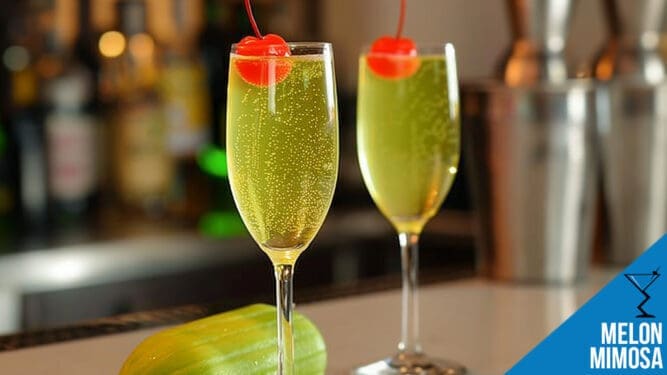
Ingredients
- 2 oz Melon Liqueur
- 4 oz Champagne
Instructions
Combine Ingredients:
- Pour 2 oz of melon liqueur and 4 oz of champagne together in a champagne flute.
Serve:
- Serve immediately and enjoy.
Notes
Estimated Nutrition:
Where it came from
The Mimosa itself is a brunch icon, thought to have originated in Paris in the 1920s. The Melon Mimosa is a modern riff, likely born in a bar or home kitchen looking to add a new flavor to the sparkling wine and liqueur format. There’s no specific historical record for this particular variation, but it’s a natural evolution of the popular base recipe.
This drink is firmly in the Mimosa family, a broad category of sparkling wine cocktails often served at brunch. Its closest relatives are the classic Mimosa (orange juice and sparkling wine) and the Bellini (peach puree and Prosecco). What sets the Melon Mimosa apart is its distinct, often candy-sweet, melon flavor, which gives it a unique profile among its fruit-and-fizz cousins.
You’d typically find a Melon Mimosa at a brunch service, a casual garden party, or a poolside gathering. It’s a friendly, unpretentious drink that’s easy to make in batches, making it a good fit for events where you want something a little special without requiring a full bar setup. It’s not a serious cocktail bar staple, but it certainly has its place.
What it tastes like
The taste profile of a Melon Mimosa is unapologetically sweet and fruity, with a bright, often artificial, melon flavor hitting upfront. The mid palate is dominated by the effervescence of the champagne, which provides a necessary acidic cut to the liqueur’s sweetness. The finish is clean, crisp, and leaves a lingering sugary melon note, making it a very refreshing, light-bodied drink.
With 2 oz of a 21% ABV melon liqueur and 4 oz of a 12% ABV champagne, the Melon Mimosa clocks in around 15% ABV. This means it’s significantly lighter than a spirit-forward cocktail, which can often be 20-25% ABV or higher. However, it’s still about three times stronger than a typical 5% ABV beer, so while it drinks easy, it’s not a session drink if you’re planning on having more than a couple.
The technique
Building a Melon Mimosa is straightforward. Start by ensuring both your melon liqueur and champagne are well chilled. Pour the melon liqueur into a champagne flute first. Then, slowly top it with the chilled champagne. The key is to pour gently down the side of the glass to preserve as much effervescence as possible. Give it a quick, gentle stir if you must, but often the pouring action is enough to combine.
The one technique tip that matters most for any Mimosa variation is to keep all your ingredients thoroughly chilled. Warm sparkling wine goes flat fast, and warm liqueur makes for a cloying drink. Cold ingredients ensure maximum fizz retention and a crisp, refreshing taste. Skipping this step means you’ll end up with a sad, flat, lukewarm drink that’s a waste of good bubbles.
Drink Buddy Exclusive
Tell us what's in your cabinet.
Our Cocktail Builder takes whatever bottles you've got and hands you every drink you can actually make tonight.
Open the Builder →Get the Drink Buddy newsletter
One drink, one tip, one Tuesday a month.
Plus the recipes we drop before they hit the site. Zero spam.
Ingredient Spotlight
The bottles that make or break this drink.
Melon Liqueur
- Use
- Midori is the classic choice here, known for its vibrant green color and distinct honeydew melon flavor. Other brands like Bols Melon or Japanese melon liqueurs also work well, provided they offer a genuine melon taste without being overly syrupy. Aim for something around 20-23% ABV.
- Skip
- Avoid generic, bottom-shelf ‘melon schnapps’ that taste more like artificial candy than actual fruit. These often have a harsh chemical undertone and will make your Mimosa taste cheap and unbalanced. Also, skip anything that’s too thick and viscous, as it will weigh down the drink.
- Why
- The melon liqueur is the defining characteristic of this drink. It provides the signature flavor, color, and a significant portion of the sweetness. Without a quality melon liqueur, you simply don’t have a Melon Mimosa; you have a sparkling wine with a green tint.
Champagne
- Use
- A dry sparkling wine is your best bet. Actual Champagne (Brut or Extra Dry), Prosecco, or Cava all work beautifully. Look for something crisp and not too sweet, as the melon liqueur already brings plenty of sugar to the party. The goal is bubbles and acidity.
- Skip
- Sweet sparkling wines like Asti Spumante or demi-sec options will make the drink overly sweet and cloying. Also, obviously, skip anything that’s gone flat. A Mimosa relies on its fizz, so a fresh bottle is crucial.
- Why
- Champagne provides the essential effervescence and acidity that brightens the drink and balances the sweetness of the melon liqueur. It’s the ‘sparkle’ in the sparkling cocktail, giving it lift and a refreshing finish.
Three Variations
Three real ways bartenders riff on this drink. Same idea, three different jackets.
Mimosa
- The original brunch classic.
- Swap the melon liqueur for 2 oz of fresh orange juice for the timeless Mimosa. It’s brighter and less sweet than its melon cousin.
Bellini
- Peachy keen and bubbly.
- For a Bellini, use 2 oz of fresh peach puree instead of melon liqueur. Traditionally made with Prosecco, it offers a softer, fruitier profile.
Kir Royale
- Simple, elegant, and berry-infused.
- Combine 0.5 oz of crème de cassis (blackcurrant liqueur) with 5.5 oz of Champagne for a more sophisticated, tart, and berry-flavored sparkling cocktail.
What if I don't have…
Quick substitutions for when the bottle shop is closed.
You can try muddling fresh honeydew melon with a touch of simple syrup and adding a splash of vodka or gin for a more natural melon flavor, though it won’t be as sweet or vibrant.
Prosecco or Cava are excellent and often more affordable alternatives. Just make sure it’s a dry style to maintain balance with the sweet liqueur.
A white wine glass or a coupe glass will work just fine. The goal is to show off the bubbles, so a clear glass is ideal.
Frequently Asked Questions
Direct answers to what people search for after Googling this drink.
What is in a Melon Mimosa?
A Melon Mimosa contains 2 oz of melon liqueur and 4 oz of champagne.
Is a Melon Mimosa sweet?
Yes, a Melon Mimosa is generally quite sweet, owing to the melon liqueur. The dry champagne helps to balance it out.
What kind of melon liqueur should I use?
Midori is the most common and widely recognized melon liqueur for this drink, but any quality melon liqueur will work.
Can I use Prosecco instead of Champagne?
Absolutely. Prosecco is a great, often more budget-friendly, substitute for Champagne in a Melon Mimosa.
Is this a good brunch drink?
Yes, the Melon Mimosa is a popular and fitting choice for brunch due to its light, fruity, and sparkling nature.
How strong is a Melon Mimosa?
A Melon Mimosa typically has an ABV of around 15%, making it lighter than most spirit-forward cocktails but stronger than beer.
Can I make a batch for a party?
You can prepare the melon liqueur in advance, but it’s best to add the champagne just before serving to keep the drink bubbly and fresh.
What glass do you serve a Melon Mimosa in?
A Melon Mimosa is traditionally served in a champagne flute to showcase its effervescence and color.
More Like This
More drinks in the same family when the night calls for them.