Shake vs Stir: Which Cocktails Need Which
The simplest rule in bartending: shake anything cloudy, stir anything clear. Here is why, what each technique does, and every classic cocktail sorted into the right column.
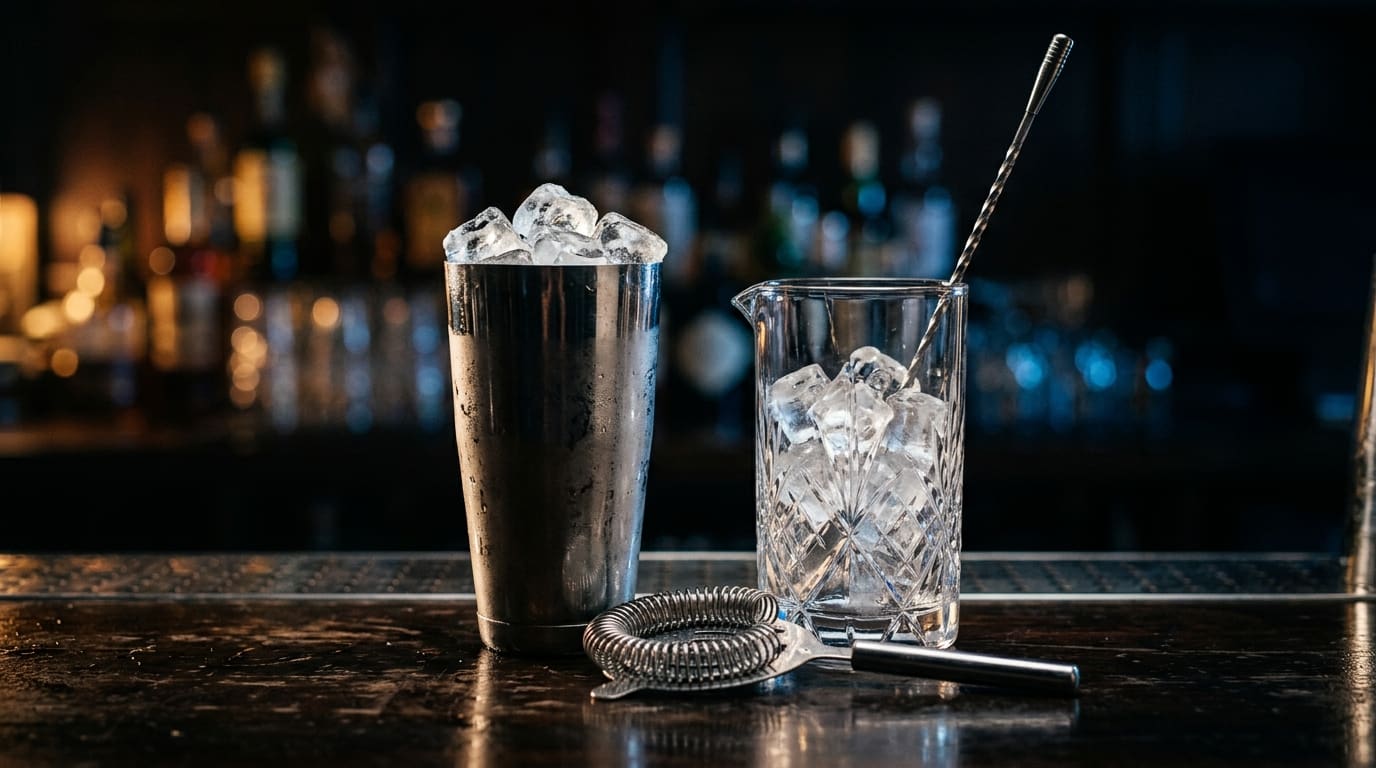
The oldest argument in bartending ends in two rules. Shake drinks with citrus, cream, or egg. Stir drinks that are all spirit. Every “but what about…” boils down to one of those two categories, and once you know the why, you will never have to think about it again.
The one-sentence rule
Shake anything cloudy. Stir anything clear.
If the cocktail contains citrus juice, fruit juice, dairy, egg white, or any ingredient you want to aerate and slightly dilute quickly: shake. If the cocktail is spirit-on-spirit (gin and vermouth, whiskey and vermouth, tequila and mezcal), stir. Bond was wrong. Stop shaking Martinis.
What shaking actually does
- Chills fast. Ice smashing against the tin transfers cold in about 10 seconds. A stir needs 30+ seconds to match it.
- Dilutes. Some water melts off the ice and into the drink. Citrus and sweet drinks need this balance; spirit drinks do not.
- Aerates. The shake introduces tiny bubbles, making the drink cloudy and giving citrus drinks that bright, frothy mouthfeel.
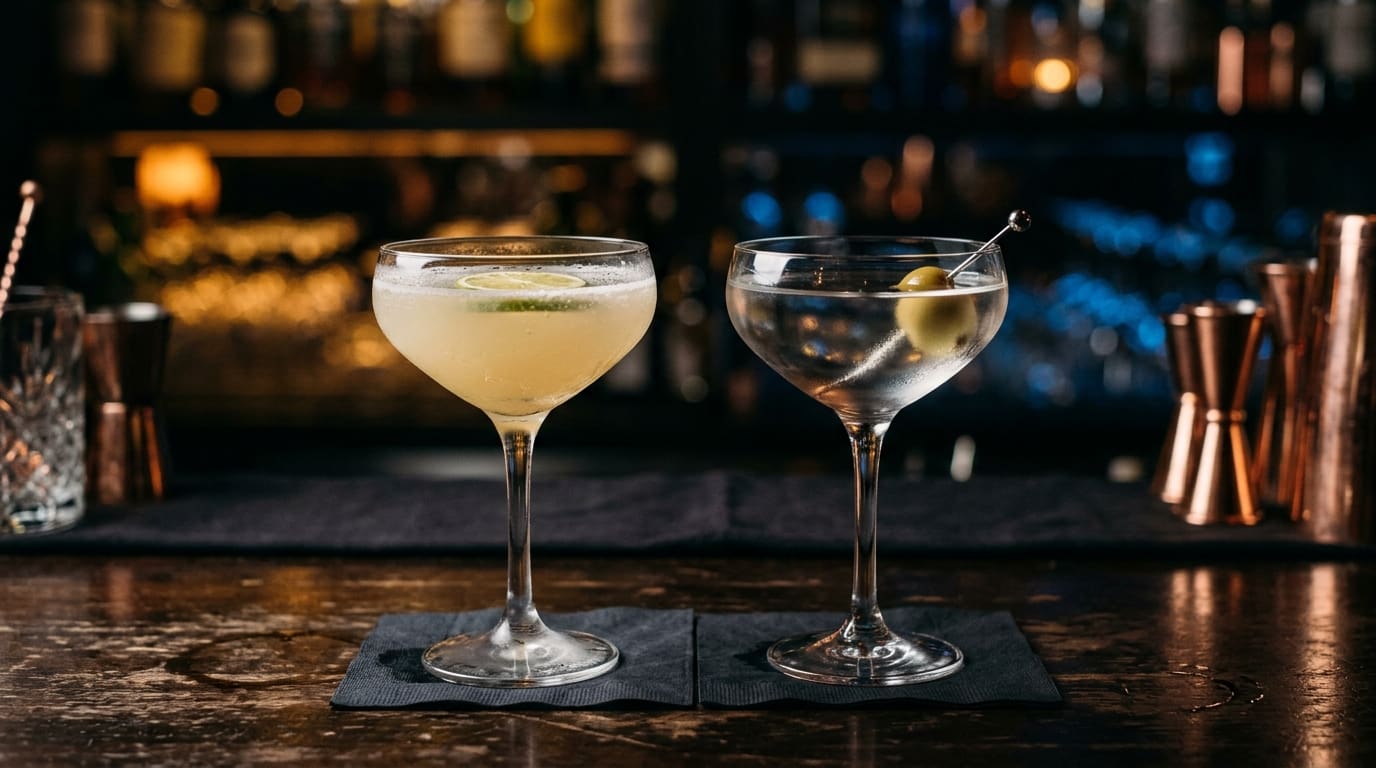
The aeration is why a shaken Daiquiri looks cloudy and a shaken Gin Sour has that signature foam head.
What stirring actually does
Stirring is gentler. It chills and slightly dilutes without aerating. The result: a crystal-clear cocktail with a silky, slightly viscous mouthfeel.
Spirit-forward drinks (Martinis, Manhattans, Negronis, Old Fashioneds) rely on that clarity. Shaking them makes the drink cloudy, slightly thinner in the mouth, and over-diluted.
The stir takes 30 seconds with a long bar spoon in a mixing glass filled with ice. Spin the spoon smoothly against the side of the glass. Smooth, consistent, unhurried.
Every classic cocktail, sorted
Shake these
- Margarita (lime, triple sec, tequila).
- Daiquiri (lime, sugar, rum).
- Whiskey Sour (lemon, sugar, bourbon, often egg white).
- Gin Sour / Pisco Sour (same family).
- Sidecar (lemon, triple sec, brandy).
- Cosmopolitan (cranberry, lime, triple sec, vodka).
- Bramble, Clover Club, Pornstar Martini, Espresso Martini.
- Anything with egg white, cream, coconut cream, or milk.
Stir these
- Dirty Martini / Filthy Martini / Classic Martini.
- Manhattan (bourbon or rye, vermouth, bitters).
- Negroni (gin, Campari, vermouth).
- Boulevardier (bourbon, Campari, vermouth).
- Mezcal Old Fashioned / classic Old Fashioned.
- Vesper, Rob Roy, Sazerac, Vieux Carre.
Three edge cases
Espresso Martini: shake, hard
It is technically all liquid (coffee, vodka, Kahlua, syrup), but the shake creates the famous crema foam on top. Shake harder than anything else: 20 seconds minimum.
Frozen drinks: blend, actually
A Frozen Margarita, Frozen Daiquiri, or Pina Colada gets blended. The blender does the shake job plus produces the slushy texture.
Mojito and Caipirinha: built in the glass
Muddled in the glass, ice added, stirred briefly with a bar spoon. Neither full shake nor full stir.
The tool list
- For shaking: a Boston shaker (two-piece) or Parisian shaker.
- For stirring: a mixing glass (Yarai-style), a long bar spoon (40cm+), and a Julep or Hawthorne strainer.
- For both: good, large, clear ice. Crushed ice dilutes too fast for stirring.
Why Bond is wrong
James Bond orders his Martini “shaken, not stirred.” Bartenders have been politely ignoring him for sixty years. A shaken Martini is cloudy, over-diluted, and loses the velvety texture of a properly stirred one. Order it how you like it, just know you are ordering a different drink.