

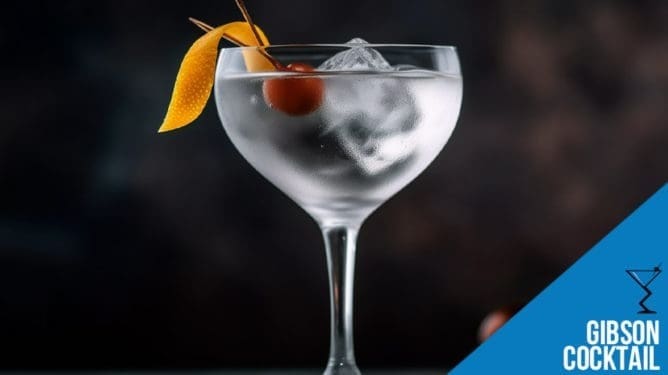
Ingredients
- 1 1/2 oz Gin
- 3/4 oz White Vermouth
- 2 Cocktail Onion
Instructions
- Stir Gin and vermouth over ice cubes in a mixing glass. Strain into a cocktail glass. Add the cocktail onions and serve.
Estimated Nutrition:
Where it came from
The true genesis of the Gibson Cocktail is murky, as is often the case with older drinks. Lore points to Walter D.K. Gibson, a businessman who supposedly ordered his Martini with an onion instead of an olive at San Francisco’s Bohemian Club in the late 1800s. The drink later appeared in print in William Boothby’s 1908 cocktail guide, solidifying its place in the cocktail canon. It’s a drink for the discerning, often ordered by those who enjoy a classic with a twist.
This drink is a direct descendant of the Martini family, sharing its DNA with classics like the Dry Martini and the Dirty Martini. While its siblings opt for a lemon twist or olive brine, the Gibson stands apart with its pickled onion garnish. This simple swap fundamentally alters the drink’s character, introducing a sharp, savory, and slightly acidic note that sets it distinctly apart from its olive-laden cousins.
You’d typically find a Gibson in a classic cocktail bar, a dimly lit hotel lounge, or perhaps a high-end steakhouse. It’s a pre-dinner drink or a sophisticated nightcap, not something you’d usually see at a rowdy dive bar or a beachside tiki hut. It’s a drink that demands a certain environment, one that appreciates its understated elegance and assertive flavor.
What it tastes like
From the first sip, the Gibson presents a clean, crisp, and intensely dry profile, driven by the gin’s botanicals. The white vermouth adds a subtle floral and herbaceous complexity, rounding out the spirit’s sharp edges. The finish is long and dry, with the lingering savory, slightly briny punch from the pickled onion that defines its unique character. It’s a bracing, spirit-forward experience with a savory backbone.
At approximately 33% ABV, the Gibson is a potent, spirit-forward cocktail. To put that in perspective, a standard 12 oz can of beer is usually around 5% ABV, while many mixed drinks hover between 15-20% ABV. This means a Gibson packs a significant punch, delivering roughly 2.5 times the alcohol concentration of a typical cocktail, and far more than a beer. Handle with respect.
The technique
Building a Gibson is straightforward. You’ll combine your gin and vermouth in a mixing glass filled with fresh, solid ice. Stir thoroughly until the mixture is well chilled and slightly diluted, typically for about 30 seconds. This isn’t a drink to shake unless you enjoy a cloudy, over-aerated cocktail. Once chilled, fine strain the liquid into a pre-chilled cocktail glass. The final touch is the signature pickled onions as a garnish.
The most crucial technique for any Martini style drink, including the Gibson, is proper chilling and dilution. Stirring with plenty of fresh ice until the mixing glass is frosty ensures the drink reaches its optimal temperature and achieves the right level of dilution. Skimp on the stirring time or use old, watery ice, and you’ll end up with a warm, overly boozy drink that tastes harsh and unfinished, completely missing the crisp, smooth character it should have.
Drink Buddy Exclusive
Tell us what's in your cabinet.
Our Cocktail Builder takes whatever bottles you've got and hands you every drink you can actually make tonight.
Open the Builder →Get the Drink Buddy newsletter
One drink, one tip, one Tuesday a month.
Plus the recipes we drop before they hit the site. Zero spam.
Ingredient Spotlight
The bottles that make or break this drink.
Gin
- Use
- Opt for a classic London Dry Gin like Tanqueray, Beefeater, or Bombay Sapphire. Their crisp juniper and citrus profiles provide the necessary backbone and dryness to balance the savory onion.
- Skip
- Avoid overly floral, sweet, or heavily spiced gins. Brands like Hendrick’s or some new-wave gins can clash with the pickled onion, creating an unbalanced and muddled flavor profile.
- Why
- Gin is the dominant spirit, and its quality and botanical character are paramount. It provides the essential structure and dryness that allows the vermouth and onion to play their supporting roles without overpowering the drink.
White Vermouth
- Use
- Stick to a good quality dry white vermouth, often labeled as ‘French’ vermouth. Dolin Dry or Noilly Prat Dry are excellent choices that provide the right herbaceous and slightly bitter notes.
- Skip
- Never use sweet vermouth or Blanc/Bianco vermouth. These are far too sugary and will completely throw off the dry, crisp balance of the Gibson, turning it into something entirely different and cloying.
- Why
- Vermouth acts as the aromatic modifier, softening the gin’s intensity and adding complexity without adding sweetness. Its dry, herbaceous character is essential for complementing the pickled onion rather than fighting against it.
Three Variations
Three real ways bartenders riff on this drink. Same idea, three different jackets.
Dirty Gibson
- Briny and Bold
- For those who like their savory notes turned up, add a splash of the pickled onion brine to the mixing glass. This intensifies the briny character, making for an even more assertive drink.
Reverse Gibson
- Vermouth Forward
- Flip the proportions, using more dry vermouth than gin. This results in a lighter, more aromatic cocktail, letting the vermouth’s herbaceous qualities shine while still featuring the signature onion.
Vodka Gibson
- Smooth Operator
- Swap out the gin for a good quality vodka. This delivers a smoother, cleaner spirit base, allowing the crispness of the vermouth and the sharpness of the pickled onion to take center stage without gin’s botanical profile.
What if I don't have…
Quick substitutions for when the bottle shop is closed.
A good quality vodka can step in if gin isn’t your style or you’re out. The drink becomes a Vodka Gibson, losing the juniper backbone but retaining its dry, savory character.
If you’re out of dry vermouth, a very dry fino sherry can work in a pinch, though it will impart a nuttier, more oxidized flavor. Lillet Blanc is another option, but it’s sweeter so use sparingly.
A green olive will turn this into a standard Martini, which is fine but loses the Gibson’s unique identity. A caper berry offers a similar briny pop if you have them on hand.
A chilled coupe or Nick & Nora glass works perfectly. If all else fails, a small, chilled rocks glass can serve, though it’s not the traditional presentation.
Frequently Asked Questions
Direct answers to what people search for after Googling this drink.
What is in a Gibson Cocktail?
A Gibson Cocktail consists of gin and dry white vermouth, traditionally garnished with one or more pickled cocktail onions.
What’s the difference between a Martini and a Gibson?
The primary difference lies in the garnish. A Martini is typically garnished with an olive or a lemon twist, while a Gibson is always garnished with a pickled cocktail onion.
Is a Gibson sweet or dry?
A Gibson is a very dry, spirit-forward cocktail. The gin and dry vermouth provide a crisp, bracing profile, with the pickled onion adding a savory, briny note rather than sweetness.
What kind of gin should I use for a Gibson?
A classic London Dry Gin is generally preferred for its strong juniper and citrus notes, which stand up well to the dry vermouth and the savory onion. Brands like Tanqueray or Beefeater are good choices.
Should a Gibson be shaken or stirred?
A Gibson, like a Martini, should always be stirred, not shaken. Stirring ensures proper chilling and dilution without clouding the drink or over-aerating it, preserving its silky texture.
Why is it called a Gibson?
The name’s origin is debated, but popular legend attributes it to a businessman named Walter D.K. Gibson, who supposedly requested his Martini with an onion instead of an olive in the late 1800s.
Can I make a Gibson with vodka?
Yes, you can substitute vodka for gin to make a Vodka Gibson. This results in a cleaner, smoother drink where the vermouth and onion flavors are more prominent without the gin’s botanical complexity.
How many onions should I use in a Gibson?
Traditionally, one or two pickled cocktail onions are used as a garnish. Some prefer three for a bolder visual and flavor impact, but avoid overdoing it to maintain balance.
More Like This
More drinks in the same family when the night calls for them.



Thanks for sharing this one!
The instructions were clear and easy to follow!
This was so refreshing!
I’m definitely making this again!
Wow, the Gibson Cocktails simplicity with a classy twist is pure cocktail magic! Cheers!
Wow, the Gibson Cocktail is a classy twist with those pickled onions! Cheers to sophistication!
Wow, the Gibson Cocktail is a classy twist on the classic martini! Love those pickled onions!
I love the tangy kick of those pickled onions in the Gibson cocktail! Cheers!
I love the classy simplicity of the Gibson Cocktail – a true timeless classic! Cheers!
Wow, the Gibson Cocktail is the classy touch my Friday nights needed! Cheers! 🍸
Wow, the Gibson Cocktail is a game-changer! Love the pickled onion twist – so unique!
This Gibson Cocktail is a classy twist on the classic martini. Love the pickled onions!
I love how the pickled onion adds a unique twist to the classic cocktail! Cheers!
I love the sharpness of the pickled onion in the Gibson Cocktail! Perfect balance. Cheers!
Wow, the Gibson Cocktails simplicity is pure elegance! Cheers to this classic beauty!
Awsome!!