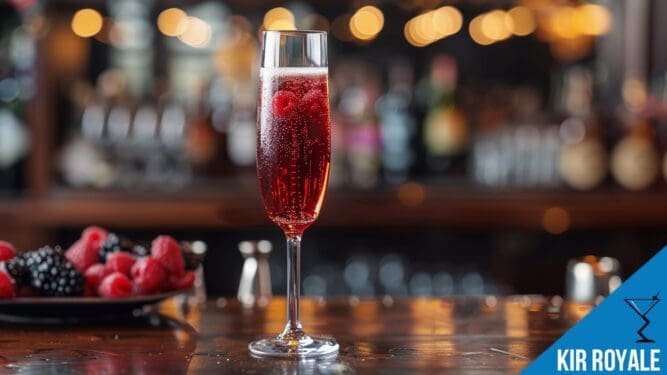
Ingredients
- 1 part Creme De Cassis
- 3 parts Champagne
Instructions
Pour Crème De Cassis:
- Pour the crème de cassis into the bottom of a champagne flute.
Top with Champagne:
- Top with chilled champagne.
Serve:
- Serve immediately and enjoy your Kir Royale Cocktail.
Notes
Estimated Nutrition:
Where it came from
The Kir Royale is a celebratory offshoot of the traditional Kir, which hails from Burgundy, France. Canon Félix Kir, a mayor of Dijon in the mid 20th century, popularized the Kir. He used local white wine, typically Aligoté, and crème de cassis to promote regional products after World War II. The “Royale” version, substituting champagne for still white wine, emerged later, giving the drink a more upscale and festive character.
This cocktail belongs to the sparkling wine family, sharing lineage with drinks like the Bellini or Mimosa. However, unlike its fruit puree or juice based relatives, the Kir Royale uses a concentrated fruit liqueur. This gives it a bolder, less pulpy fruit flavor and a striking deep color, setting it apart as a simple yet impactful two-ingredient classic.
You will typically encounter a Kir Royale at a formal brunch, a wedding reception, or as a sophisticated pre dinner drink at a nice restaurant or bar. It is a go to for any special occasion or when you want something celebratory that is not overly strong before a meal.
What it tastes like
The initial taste delivers a burst of sweet and tart blackcurrant, quickly followed by the dry, effervescent crispness of the champagne. The crème de cassis anchors the drink with a rich, dark fruit core, which the sparkling wine then brightens and lifts. The finish is clean, slightly fruity, and refreshingly dry, leaving a pleasant berry note on the palate.
Using a typical ratio of 1 part crème de cassis (around 15-20% ABV) to 3 parts champagne (around 12% ABV), a Kir Royale usually lands in the 12-13% ABV range. This places it slightly stronger than a standard beer, but generally lighter in alcohol content than many spirit forward cocktails. It is designed for enjoyment and flavor, not for a heavy buzz.
The technique
Building a Kir Royale is simple. Start by pouring the crème de cassis into a chilled champagne flute. Then, slowly top it with well chilled champagne. Pouring the cassis first allows it to settle at the bottom and ensures the champagne can be added gently, minimizing excessive foaming. Serve it immediately to ensure maximum effervescence and chill.
The most important technique tip for this drink is to ensure both your crème de cassis and your champagne are thoroughly chilled. Warm champagne will foam aggressively, overflow, and rapidly lose its carbonation, resulting in a flat, unappealing drink. Cold ingredients maintain the drink’s refreshing temperature and preserve the delicate bubbles.
Drink Buddy Exclusive
Tell us what's in your cabinet.
Our Cocktail Builder takes whatever bottles you've got and hands you every drink you can actually make tonight.
Open the Builder →Get the Drink Buddy newsletter
One drink, one tip, one Tuesday a month.
Plus the recipes we drop before they hit the site. Zero spam.
Ingredient Spotlight
The bottles that make or break this drink.
Crème de Cassis
- Use
- Look for quality brands like Briottet, Giffard, or Lejay Lagoute. A good cassis will have a deep, natural blackcurrant flavor, not just syrupy sweetness. ABV is usually around 15-20%.
- Skip
- Avoid generic or overly sweet blackcurrant liqueurs that taste artificial or like candy. These will overpower the champagne and make the drink cloying.
- Why
- Crème de cassis is the defining ingredient of the Kir Royale, providing its signature color, sweetness, and distinct fruity depth. It is the heart of the drink’s flavor profile.
Champagne
- Use
- Any decent quality Brut Champagne works well. You do not need a top-shelf vintage bottle. Prosecco or Cava are also excellent and budget friendly substitutes, just ensure they are dry.
- Skip
- Never use flat or previously opened sparkling wine. The effervescence is crucial. Also, avoid Moscato d’Asti or other very sweet sparkling wines; they will make the drink unbalanced and overly sugary.
- Why
- Champagne provides the necessary effervescence, dryness, and acidity that perfectly balances the rich sweetness of the cassis. It is the “Royale” part of the name and the primary volume of the drink.
Three Variations
Three real ways bartenders riff on this drink. Same idea, three different jackets.
Kir
- The Original
- This is the classic version, replacing the champagne with dry white wine, typically Aligoté or Bourgogne Blanc, for a less fizzy, more vinous experience.
Kir Impérial
- Fancy Berries
- This variation swaps the crème de cassis for raspberry liqueur, such as Chambord, and is still topped with champagne, offering a brighter, red fruit flavor.
Kir Pêche
- Peachy Keen
- Instead of blackcurrant, crème de pêche is used, creating a lighter, sweeter, and distinctly peachy sparkling cocktail with champagne.
What if I don't have…
Quick substitutions for when the bottle shop is closed.
Try Chambord (raspberry liqueur), Crème de Mûre (blackberry liqueur), or even a small amount of blackcurrant syrup for the flavor, though it will lack the alcoholic kick.
Use Prosecco, Cava, or another dry sparkling wine. Ensure it is dry and well chilled for the best results.
A white wine glass or a coupe glass can work in a pinch, though they might dissipate the bubbles faster than a flute.
Chill them first. Place the champagne bottle in an ice bucket and ensure your cassis is refrigerated. Warm ingredients make a poor Kir Royale.
Frequently Asked Questions
Direct answers to what people search for after Googling this drink.
What is in a Kir Royale?
A Kir Royale contains crème de cassis, a blackcurrant liqueur, and champagne.
Is a Kir Royale sweet?
It offers a pleasant balance of sweet and dry. The sweetness of the cassis is beautifully cut by the dry, crisp champagne.
What kind of champagne for Kir Royale?
A dry Brut champagne is ideal. Avoid anything labeled “extra dry” unless you prefer a sweeter drink.
Can I use Prosecco for Kir Royale?
Yes, Prosecco or Cava are common and perfectly acceptable substitutes for champagne.
How do you pronounce Kir Royale?
It is pronounced “Keer Roy-AL.”
What’s the difference between Kir and Kir Royale?
A Kir is made with dry white wine and crème de cassis, while a Kir Royale uses champagne instead of white wine.
Is Kir Royale an aperitif or digestif?
It is primarily an aperitif, meaning it is meant to be enjoyed before a meal to stimulate the appetite.
What foods pair well with a Kir Royale?
It pairs wonderfully with light appetizers, cheese boards, fresh fruit, or brunch items.
More Like This
More drinks in the same family when the night calls for them.