Where it came from
The Irish Coffee originated in the 1940s at Foynes Airport in County Limerick, Ireland. Chef Joe Sheridan created it to warm up American passengers whose flight had turned back due to bad weather. It was an instant hit, quickly becoming a staple for travelers passing through.
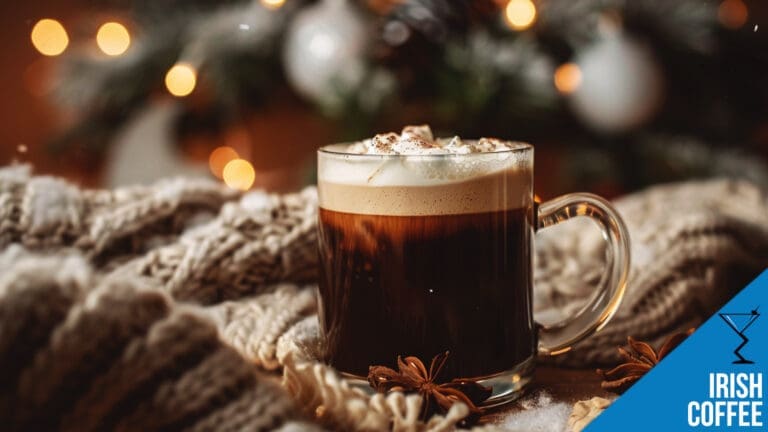
This drink sits comfortably in the hot cocktail family, a cousin to the likes of spiked hot chocolate or a Tom and Jerry. What truly separates the Irish Coffee is the distinct layering of cool cream over hot, boozy coffee. It is a simple trick that provides a unique textural and temperature contrast.
You order an Irish Coffee when the weather turns nasty or you are looking for a comforting nightcap. It is also a solid brunch choice, especially if you are easing into the day. This is a drink for cozy pubs, ski lodges, or your own kitchen after a long one.
What it tastes like
Expect a robust coffee flavor upfront, tempered by the smooth, malty notes of Irish whiskey. The brown sugar adds a subtle sweetness and depth, while the cold, unsweetened cream provides a luxurious, velvety texture that contrasts beautifully with the hot liquid below. It is a balanced blend of bitter, sweet, and spirited.
With a typical recipe using 1.5 ounces of Irish whiskey, an Irish Coffee usually lands around 18-22% ABV. That is roughly three to four times the alcohol content of a standard 5% ABV beer. It is potent enough to warm you up without knocking you out, provided you do not go overboard.
The technique
Start by preheating your glass with hot water. Dissolve a teaspoon or two of brown sugar in the hot coffee. Add 1.5 to 2 ounces of Irish whiskey, then top with the sweetened coffee, leaving about an inch of headroom. Gently float lightly whipped or chilled heavy cream over the back of a spoon to create distinct layers. Serve immediately.
The single most important technique is to float the cream correctly. Make sure your cream is cold and lightly whipped or simply chilled. Pour it slowly over the back of a bar spoon held just above the coffee's surface. This keeps the cream separate and ensures that iconic, two-toned look.
Ingredient Spotlight
The bottles that make or break this drink.
Irish Whiskey
- Use
- Jameson, Tullamore D.E.W., Bushmills. Look for something smooth, not too peaty, with a decent body.
- Skip
- Heavily peated Scotch or a rough, young bourbon. It will clash with the coffee.
- Why
- Irish whiskey is the heart of the drink. Its smoothness and subtle sweetness complement the coffee without overpowering it, providing warmth and a pleasant kick.
Hot Coffee
- Use
- A strong, dark roast, freshly brewed. French press or pour-over works well.
- Skip
- Weak, instant coffee or anything too acidic. It will make the drink taste thin and sour.
- Why
- The coffee is the base, providing the robust flavor and warmth. A quality brew makes all the difference in the final taste and body.
Heavy Cream
- Use
- Fresh, heavy cream, ideally 35% fat or higher. Lightly whip it until it is just thickened but still pourable.
- Skip
- Half-and-half, milk, or aerosol whipped cream. They will not float properly or provide the right texture.
- Why
- The cream provides a cool, rich counterpoint to the hot coffee and whiskey. Its texture is crucial for the visual appeal and the delightful contrast in every sip.
Three Variations
Three real ways bartenders riff on this drink.
Mexican Coffee
- Tequila and coffee's spicy cousin.
- Swap Irish whiskey for tequila and add a splash of coffee liqueur. Garnish with a cinnamon stick for extra flair.
Spanish Coffee
- Rum, coffee, and a fiery presentation.
- Use dark rum and coffee liqueur, often flamed with a sugar rim. It is a bit more theatrical than the original.
Baileys Coffee
- Creamy, Irish, and extra indulgent.
- Replace some or all of the Irish whiskey with Baileys Irish Cream for a sweeter, even creamier version.
What if I don't have…
Quick substitutions for when the bottle shop is closed.
Use bourbon or a good quality dark rum. The flavor profile will shift, but it will still be a warm, boozy coffee.
Use simple syrup or a touch of maple syrup. Granulated white sugar works in a pinch, just ensure it fully dissolves.
Try a rich oat milk or coconut cream, ensuring it is cold and thick enough to float. The texture will be different, but it can work.
Any heat-proof glass mug or even a sturdy ceramic mug will do. Just preheat it to prevent cracking.
Frequently Asked Questions
Direct answers to what people search for after Googling this drink.
What is in a Irish Coffee 3?
A standard Irish Coffee 3 contains Irish whiskey, hot coffee, brown sugar, and a layer of heavy cream on top.
Can I make Irish Coffee ahead of time?
You can pre-mix the whiskey, coffee, and sugar. However, the cream should always be floated just before serving for the best texture and appearance.
What is the best whiskey for Irish Coffee?
A smooth, triple-distilled Irish whiskey like Jameson, Tullamore D.E.W., or Bushmills is ideal. Avoid anything too smoky or harsh.
Why does the cream float?
The cream floats because it is less dense than the hot coffee and whiskey mixture below it, especially if it is cold and lightly whipped.
Should the cream be sweetened?
Traditionally, the cream is unsweetened. This provides a nice contrast to the sweetened coffee below. However, a touch of sugar in the cream is a preference for some.
Is Irish Coffee a dessert drink?
It can certainly be enjoyed as a dessert drink, but it is also a popular brunch item or a warming cocktail for chilly evenings.
How do I prevent the glass from cracking?
Always preheat your glass with hot water before pouring in the hot coffee and whiskey. This tempers the glass and reduces thermal shock.
Can I use decaf coffee?
Yes, you can use decaf coffee if you prefer to avoid caffeine. The flavor profile will remain similar, just without the jolt.
More Like This
More drinks in the same family.